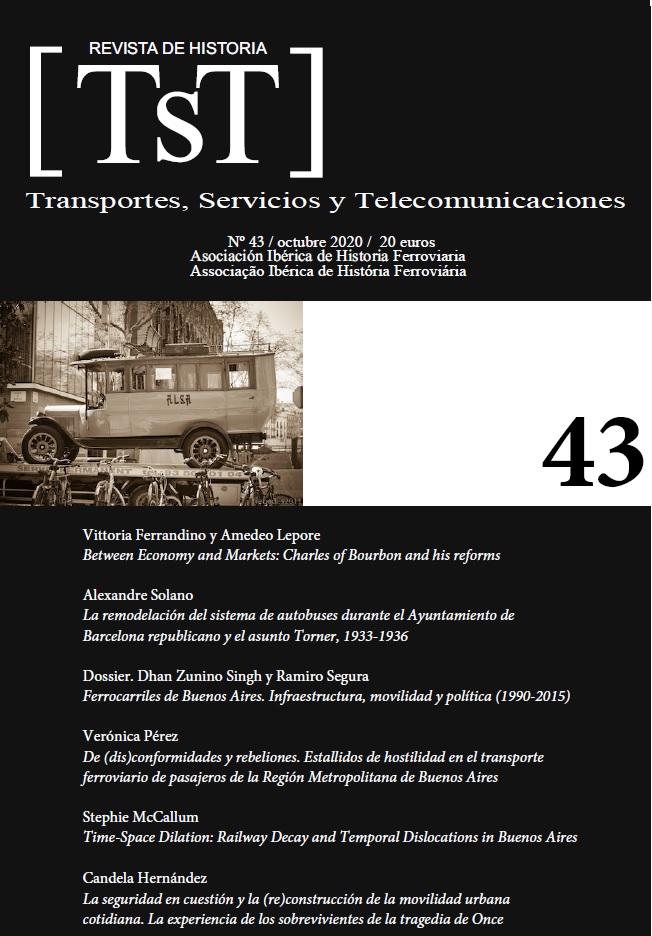
TsT43. 2020.
Articles
♦ Vittoria Ferrandino and Amedeo Lepore
Between the Economy and the Markets: Charles of Bourbon and His Reforms
Abstract:
Charles Sebastian of Bourbon and Farnese (1734–1759) was a leading figure in Enlightenment reformism, within the innovative milieu of Naples associated with Antonio Genovesi, Giambattista Vico, Ferdinando Galiani, Pietro Giannone, Antonio Broggia, and others. His efforts led to the construction of many public works and succeeded in elevating Naples to the status of a major European capital, a key destination for travelers on the Grand Tour. Charles of Bourbon’s work was also highly intensive in the areas of legal and judicial reforms. However, it was in the economic sector where, thanks to the contribution of Bernardo Tanucci, the most significant results were observed, linking the Kingdom of Naples to the general movement of European renewal.
Most of the Kingdom’s revenue was spent on luxury expenses, on “arrendamenti” (the shares of the public debt of the time), or deposited in public banks. Private bankers, public administrations, monasteries, churches, the great houses of the nobility and commerce, lawyers, and even the most modest individuals opened accounts with them. The accounts did not pay any interest to depositors, but despite this, depositing funds was particularly common due to the dual function of serving as a useful source of cash for those who deposited and, in particular, to facilitate payments of fedi (certificates of deposit) and polizze (checks). Furthermore, in times of financial need, the municipal administration and the Royal Court sought loans and made extensive use of deposits in public banks. Today, it remains a subject of analysis and debate whether Charles’s reforms achieved their objectives and to what extent, although the overall scope of the changes undertaken within a limited timeframe seems undeniable.
♦ Alexandre Solano
The Bus System Renovation Projects During the Republican City Council of Barcelona and the Torner Affair, 1933–1936
Abstract:
The public transportation network in the city of Barcelona had developed over decades without any planning by public institutions. Municipal authorities during the Second Republic chose to take the initiative and create a plan aimed at relieving congestion in the busiest areas and extending public transportation to the outermost neighborhoods.
However, the bus route plan encountered a path fraught with difficulties, including various tenders, tensions in city council sessions, delays in implementation, and even judicial intervention.
Dossier
♦ Dhan Zunino Singh and Ramiro Segura
Buenos Aires Railways: Infrastructure, Mobility, and Policy (1990–2015)
♦ Verónica Pérez
On (Dis)agreements and Uprisings: Outbreaks of Hostility in Passenger Rail Transport in the Buenos Aires Metropolitan Region
Abstract:
This study examines the factors involved in the generation of outbursts of hostility by passengers on the Buenos Aires metropolitan railway during the first decade of the 21st century. In particular, the formation of negative perceptions and feelings arising from travel experiences, in conjunction with the role this mode of transport plays in users’ daily lives, are key aspects in understanding these events. To conduct the study, three case studies were carried out on the most emblematic episodes of collective violence during the period. The research was supplemented with service quality statistics, passenger surveys and interviews, statistics provided by public agencies, interviews with key informants, and specific studies on the subject.
♦ Stephanie Mcallum
Spatio-temporal expansion: The decline of the railways and temporal displacements in Buenos Aires
Abstract:
Argentina has the most extensive railway network in Latin America, covering some 30,000 km of track. In a process occasionally described as “railway murder,” by the mid-1990s most of the branch lines and railway workshops in the interior of the country had been shut down, workers laid off, and freight and passenger lines privatized. In the city and province of Buenos Aires, meanwhile, metropolitan and urban trains continued to offer an accessible, albeit precarious, mode of transportation. Based on ethnographic fieldwork in Buenos Aires, including participant observation on trains and at stations, railway clubs, railway museums, and workshops, as well as interviews with passengers, activists, railway workers, and railway enthusiasts, this article narrates the history of the railway network’s privatization through the lens of temporality. It traces how changes in management and maintenance practices, and the resulting deterioration of infrastructure, produced temporal dislocations for passengers and railway workers. It also examines mobility on a forgotten branch line of a route notoriously plagued by railway accidents, the Merlo-Lobos branch line, which connects the suburbs of Buenos Aires with a tourist town in the province’s fertile plains and is served by aging diesel trains. Here, the condition of remoteness stems not from physical distance from urban centers, but from the temporal disruptions resulting from an unreliable mode of transport. This article illustrates the relevance of an ethnographic focus on the materiality of infrastructure and suggests that the histories inscribed on surfaces and structures shape the experience of mobility.
♦ Candela Hernández
Safety in Question and the (Re)construction of Everyday Urban Mobility: The Experience of Survivors of the Once Tragedy
Abstract:
On February 22, 2012, a train on the Sarmiento line of the Buenos Aires metropolitan railway crashed into the terminal station, causing the train to derail and resulting in 789 injuries and 52 fatalities. This incident starkly highlighted the historical deterioration of the railways, which brought the issue of railway safety and service quality to the forefront of the public, political, and judicial agendas. This article seeks to explore the multiple meanings attributed to the concept of safety by the surviving passengers of the Once disaster, examining the extent to which these meanings subsequently emerge in the (re)construction of their daily urban mobility in relation to the railway. The methodological strategy employed consists of both original and documented surveys of interviews and testimonies from relatives of victims and survivors. This is complemented by the use of surveys, official statistics, press reports, audiovisual materials, and archival records related to the event.
Reviews
♦ Olga Macías
Ángel Ormaechea Hernáiz, Railways in the Basque Country (1855–1936)
♦ Domingo Cuellar
Juan Manuel Matés-Barco and Alicia Torres-Rodríguez, Public Services in Spain and Mexico (19th–20th Centuries)
♦ Carlos Larrinaga
Raúl Molina Recio (Editor), Pioneers: Companies and Entrepreneurs in the First Third of the 20th Century in Spain
♦ Antonio Santamaría
Michael González Sánchez, The Tracks That Built the City: The Trams of Havana
♦ Jesús Mirás
Manel Martín Pascual, Aigües de Barcelona. 150 Years Serving the City (1867–2017)
♦ Jesús Mirás
Pedro Pintado Quintana, The Railroad in the City of Valladolid (1858–2018)
♦ Begoña Villanueva
Manuela Caballero and Pascual Santos-López, Inventors and Patents in the Region of Murcia. An Industrial and Technological Heritage