Biographical Dictionary of Iberian Railways Biographical Dictionary of Iberian Railways
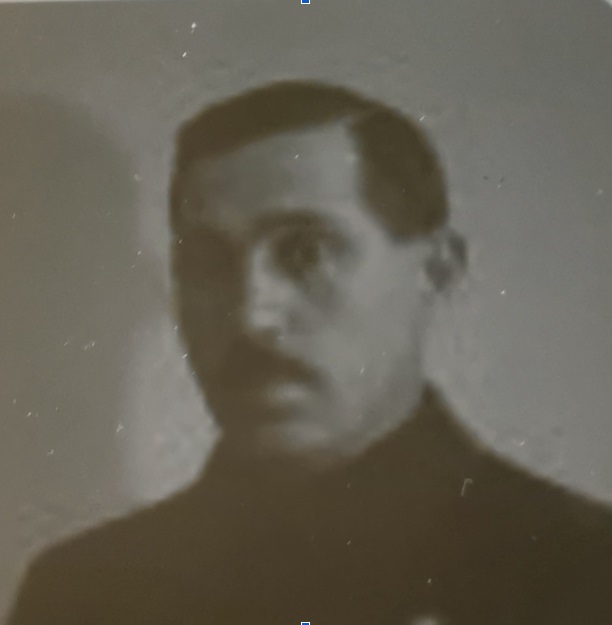
Manuel Vieira Tomé
Manuel Vieira Tomé (Born in Tomar in 1887; died in Lisbon at the Aljube Prison on April 23, 1934). Office clerk at the Portuguese Railway Company. He was a member of the Red Aid organization. He served as a leader of the Portuguese Railway Company Employees’ Union. In 1918 and 1920, he participated in acts of solidarity with the Russian Revolution. He was a member of the revolutionary committee and the Portuguese Railway Company Employees’ Improvement Commission. On March 15, 1828, he was arrested by order from above and handed over to the Ministry of Justice’s Intelligence Police in Santarém. He was then accused of being implicated in the so-called “Entroncamento conspiracy.” He was arrested again on April 1 and released on July 8, 1928. He also served as president of the Workers’ Savings Bank. He was arrested again on September 30, 1930, “for being a dangerous agitator and for being part of a committee tasked with organizing a congress of transportation workers.” Released on May 7, 1831, he joined the National Federation of Transportation and Communications, of which he was one of the principal founders. The political struggle intensified from that point on. He participated in organizing the general strike of January 18, 1834, organized by all the labor unions, to fight against the ban on free unions and the creation of corporate unions.
He was involved in the sabotage that led to the derailment of a train in Póvoa de Santa Iria. He was arrested for the last time on April 16, 1934, as a result of the role he played in organizing and carrying out the strike. He was tortured to death. They administered electric shocks to his head, broke the bones in his fingers, and pulled out his fingernails. A leader of the Socorro Vermelho at the time, Vasco de Carvalho, would later recount: “From the autopsy report, we obtained proof that [Manuel Tomé] had been tortured: the marks on his neck indicated that the instrument used to strangle him was perpendicular to the spine. Now, when a person hangs himself, the marks are angled relative to the spine. Therefore, he had been strangled at the police station.” The cause of death listed on his record is suicide by hanging with sheets. The newspaper of the Association *A Voz do Operário*, in June 1934, reported the news of his death, praising his cultured spirit and noting that the funeral, held on June 27, 1934, drew a large crowd. Those in attendance were not only members of the working class but also CP employees.
Bibliography
Fátima Patriarca, The Unions Against Salazar: The Uprising of January 18, 1934, ICS, Lisbon, pp. 556.