
Biographical Dictionary of Iberian Railways
Biographical Dictionary of Iberian Railways
Ivo Bosch Puig (1852–1915)
Ivo Bosch Puig was born on January 13, 1852, in the small fishing village of Arenys de Mar, in the Maresme region of Barcelona. His father was a lawyer and served as the local land registrar. He began his early education in Arenys de Mar itself, but soon left to move to Barcelona at the age of fourteen. In the Catalan capital, he trained as an assistant to a stockbroker, thus entering the world of investment business. Before his departure for Paris in 1877, it appears he had already achieved early business success by establishing himself as an independent investment manager; at least this is what the Revista Ilustrada de la Banca, Ferrocarriles, Industria y Seguros suggests in an 1899 issue. Albert Broder, however, asserts that Bosch arrived in the French city as a correspondent for the Catalan newspaper La Publicidad. Be that as it may, by 1879 he was already fully established as a stockbroker on the Paris Stock Exchange, having set up his headquarters on Rue de la Paix, which was an excellent calling card for the future of his business.
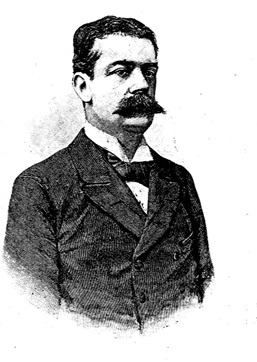
Bosch always took great care to project a certain image of his work, with the aim of impressing his partners and clients. As part of this personal publicity campaign, he took up residence in a “little hotel” on the Champs-Élysées and frequented the Opera to cultivate his social standing. All of this greatly appealed to his compatriots who, in the last quarter of the 19th century, saw Ivo Bosch as an influential figure with whom to do business. Broder recalls that this way of acting was very similar to that of José Salamanca some thirty years earlier, during the early days of the railway business in Spain. Although he did not reach the stature of the banker from Málaga—who served as Minister of Finance—Bosch also clearly exerted influence over certain ministers and politicians of the time, as we will see later.
During those early years of success, he was part of a group of small bankers who joined or collaborated with the long-established and successful Société de Crédit Mobilier Français, which had been founded years earlier by the Péreire brothers. In a remarkable social and economic rise, Bosch became a director of the new Crédit Mobilier in 1887, ushering in a new era of prosperity marked by numerous overseas ventures. Until his hasty flight from France and his forced focus on exclusively Spanish businesses, Bosch had managed major European and American companies financed primarily with French capital, overseeing liquidation and financial restructuring processes for other entities associated with Crédit Mobilier itself; among these were the Société Inmobilière and L’Ancien Comptoir, where Bosch acted effectively.
The fifteen years between this moment and his downfall, at the dawn of the 20th century, shed light on the Catalan banker’s character: an adventurer, given the risks he took in many of his ventures, and a phantom, due to his conceited and presumptuous behavior. Without a doubt, he took on risks and ventures that others, more cautious and measured, had previously rejected, but it is also true that he made extensive use of his image, his “facade,” to open doors and gain access—sometimes through underhanded means—to business ventures backed by high-ranking political circles.
One such example was the Puerto Rican railway, for which he established a company tasked with building a railway network designed primarily to serve the export of coffee, tobacco, and sugarcane. He obtained the concession in 1888 and managed to open a few kilometers of track three years later, but financial problems soon arose, and the island’s eventual fall into American hands ultimately put an end to the project.
At the same time the Puerto Rico railway project was getting underway, Ivo Bosch would involve his company and one of its subsidiaries, Banco General de Madrid, in a railway venture in Spain that had been stalled for nearly twenty years due to a lack of a bidder interested in moving the project forward: the railway line from Linares to Almería. The high construction costs in the rugged terrain of southeastern Andalusia and the poor prospects for profitability in railway operations had deterred any attempts at financing. The subsidy offered by the government was limited to 60,000 pesetas per kilometer. In 1889, this concession was also secured. The reasons for this interest may have been, on the one hand, the business opportunity presented at that time by the export of iron ore to meet intense British demand, or perhaps the desire to use this line as the starting point for the construction of a more extensive railway network, with a view to other major acquisitions: in addition to the Linares-Almería concession, the company would acquire the rights to the Baza-Granada line, the Linares-Puertollano project, and the planned connection fromBaza to La Encina. Had all these projects been completed, the network of
Bosch would have exceeded 500 km, similar to MCP and half of Andalusian lines. The reality was quite different: the last two plans died with their author, while the lines built and operated from Linares to Almería and from Moreda to Granada would havea rather precarious existence under the management of the Southern Spanish Railway Company, being absorbed by the Andalusian Railway Company in 1929, following a lease of the operations from 1916 until the death of Ivo Bosch himself.
His tendency to conduct business with a hidden agenda is evident in the creation of a sole proprietorship, The Spanish Investment and Trust, which acquired ownership of a short stretch of railroad between Guadix and Baza and subsequently leased it to Sur de España, a company he also owned. It was a curious way to ensure profits, as this lease allowed Spanish Investment to distribute dividends at the expense of Sur de España, which never managed to get out of the red.
Within the railroad industry, he also served on the boards of directors of the Colombian, Pacific, and Venezuelan railroads, as well as the Arles-Saint-Louis-du-Rhône Railroad, during the height of his power. But the railroad business was not Bosch’s only target for his expansionist ambitions; among the companies in which he held an interest—whether as a representative of Crédit Mobilier or through personal investment—one can find businesses that were at the cutting edge of modernity at the time. As founder and principal shareholder, he was the driving force behind the Madrid Telephone Company, the San Sebastián Real Estate Company, and the Submarine Cable Company.
Throughout all these operations, Bosch always relied on a group of loyal associates. In Spain, he worked closely with his brother Bartolomé and his nephew Pablo Bosch Barret, while in Paris he was always in contact with Carlos Wallut and in London with Román Romeu. Thus, his boards of directors included Diego Arias de Miranda, José Cárdenas, Fernando Cos-Gayón, Raimundo Fernández Villaverde, José Francos Rodríguez, Antonio García Alix, and General Valeriano Weyler. All had at some point in their political careers held a ministerial portfolio. Bosch himself made several attempts to enter politics, running unsuccessfully on several occasions for a seat in the Cortes as a Liberal representative for Almería.
Bosch’s financial troubles began, as we have noted, with the failed Puerto Rico railway project, which led to serious conflicts with Crédit Mobilier and the bondholders of the railway venture. And they continued during the construction of the line from Linares to Almería, where a bitter legal battle began with the French company Fives Lille, which would be exacerbated by a lawsuit filed by French bondholders who felt they had been swindled by the Catalan banker.
Ivo Bosch died on June 7, 1915, in San Sebastián, where he had also attempted to establish a real estate business—even in that, he followed in the footsteps of José Salamanca. In the months that followed, an agreement was reached between the banker’s heirs and the Andalusian Company, under which the latter acquired all the shares, credits, and rights held by the Catalan industrialist at the time of his death. This agreement was signed in Madrid between representatives of the Malaga-based company and the British ambassador, who succeeded in protecting the interests of the British mining companies operating along the line from Linares to Almería—a source of subsequent conflicts between these mining companies and the Andalusian Company.
Domingo Cuéllar