
Biographical Dictionary of Iberian Railways
Biographical Dictionary of Iberian Railways
Leonildo de Mendonça e Costa (1849–1923)
Leonildo Augusto Mendonça e Costa, known as Leonildo de Mendonça e Costa, was born in Lisbon in the former parish of Sacramento on November 5, 1849, the son of José Fortunato da Costa and Maria Isabel de Mendonça, and died on March 18, 1923. This information and the following details appeared in the Gazeta dos Caminhos de Ferro, in the first issue published after his death, and in the Supplement to the Gazeta No. 1485 of November 1, 1949, a publication commemorating the centenary of his birth.
The premature death of his parents prevented him from continuing his studies. However, his parents “bequeathed him a reasonable amount of education”(1).
He began his professional career at age 21 in an office of “some mortgage agencies” (2). In 1872, he joined António Teixeira de Vasconcelos’s Jornal da Noite as an editor. The newspaper’s bankruptcy forced him to find an alternative, and he joined the Royal Portuguese Railway Company as a station clerk, thus beginning a career that led him to become a department head.
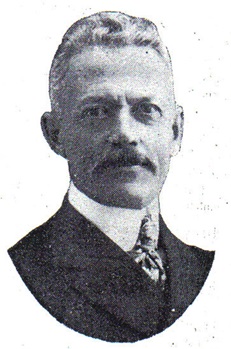
Founder, director, and owner of the *Gazeta dos Caminhos de Ferro* (3) until 1923, the year of his death, Leonildo de Mendonça e Costa—a writer, journalist, and chief inspector of the Traffic Department of the Royal Railway Company—was also the founder and director of the Railway Advertising Company; a contributor to the Gaceta de los Camiños de Hierro in Madrid, where he wrote several articles in defense of the interests of and regarding the Portuguese railways; he contributed to the newspapers Diário de Notícias, Jornal do Comércio e das Colónias, and Comércio do Porto, where he was responsible for their respective sections on the railways. He was also, according to the Grande Enciclopédia Portuguesa e Brasileira (4), a correspondent for several Azorean newspapers, having also contributed to the Revista de Turismo.
In partnership with José Duarte do Amaral, he founded the Guia Oficial dos Caminhos de Ferro, which began publication in 1882. In 1888, he founded the Gazeta dos Caminhos de Ferro , subtitled “Portugal and Spain,” which was published until 1971. He was also the author of the Manual do Viajante em Portugal, modeled after the French Guides Bleus or Baedeker guides, a publication that had several editions and was continued by Carlos de Ornelas.
Between 1876 and 1878, he also published the Almanaque da Senhora Angot and the Almanach dos Teatros, which were very well known at the time. He was also the author of several comedies performed at the Teatro do Ginásio(5) and founded the weekly newspapers“O Recreio” (6) and “Rossi”(7).
In an article published in the Comércio do Porto newspaper on March 19, 1925, and reprinted in the Gazeta, he was cited as a pioneer of tourism in Portugal for his promotion of the sector through accounts of his travels around the world (he was the most well-traveled Portuguese of his time), for the creation of the P.4 round-trip fare in Portugal(a fare that made tourist travel more affordable), and for having been the mentor and founder of the Sociedade Propaganda de Portugal “…he founded it with a handful of friends who, like him, dreamed of the greatness of the homeland through the highly lucrative tourism industry.”(8), having drafted its program and been elected its permanent secretary, a position he only left after the establishment of the Republic “(…) in a gesture of despair he felt on the day he saw the old regime, to which he was very attached, disappear” (9). This Association, founded in 1906
Among its objectives were promoting the country to both Portuguese citizens and foreigners and encouraging people to learn about and visit it.
Considered a true tourism enthusiast, he devoted part of his life to traveling.
Mendonça e Costa began his travels in 1882 and concluded them in 1922.
Mendonça e Costa was described by those who knew him as methodical and organized, possessing a great capacity for work, a restless temperament, and a fair, loyal, and patriotic spirit. He referred to his employees at the Gazeta as collaborators.
Recognition of the work he carried out on behalf of the Portuguese railways was decisive in his being awarded the rank of Knight of the Order of Christ.
He was a member of various cultural and scientific societies, such as the Association of Writers and Artists of Madrid, of which he was an honorary member, and the Lisbon Geographical Society. He also served as Vice-Consul of Argentina in Lisbon.
Mendonça e Costa directed the Gazeta dos Caminhos de Ferro, striving to ensure it maintained a high standard of quality, reflected in the careful selection of the magazine’s contributors, the pursuit of thematic diversity—beyond the core theme of railways—and coverage of topics considered of interest at the time and in line with the spirit of civilizational progress. In the tribute paid to him by the Sociedade de Propaganda de Portugal in 1933, Alberto Brandão, a member of the Society’s board, referred to Mendonça e Costa as follows
“He was the passionate pioneer of tourism in our region. He was the driving force behind the Sociedade Propaganda de Portugal, the forerunner of all our current tourism institutions(10).”
In a public notice dated November 28, 1932—nine years after his death—the Lisbon City Council decided to name a square in the parish of Penha de França after him.
Elói de Figueiredo Ribeiro
Notes
[1] Ibid., p. 98.
[2] Ibid.
[3] *A Gazeta dos Caminhos de Ferro* was published between 1888 and 1971, with a total of 1,935 issues.
[4] Mendonça e Costa (Leonildo de)in *Grande Enciclopédia Portuguesa e Brasileira*, vol. XVI, p. 912.
[5] A Woman Man; Safa, What a Scare; The Man with the Bomb; The Slaves of Labor; and The Doctor’s Secret.
[6] He published this“instructive and literary weekly” in partnership with M.M. Ribeiro, Lisbon, J.G. Sousa Neves Press, 1866.
[7] In Gazeta dos Caminhos de Ferro no. 1344, December 16, 1943, p. 590.
[8] Gazeta dos Caminhos de Ferro, no. 895, March 1, 1925, p. III.
[9] Gazeta dos Caminhos de Ferro, No. 847, April 1, 1923.
[10] Gazeta dos Caminhos de Ferro No. 1087, April 1, 1933, p. 216.