TsT36. 2018.
Artículos
♦ Florencia D’uva
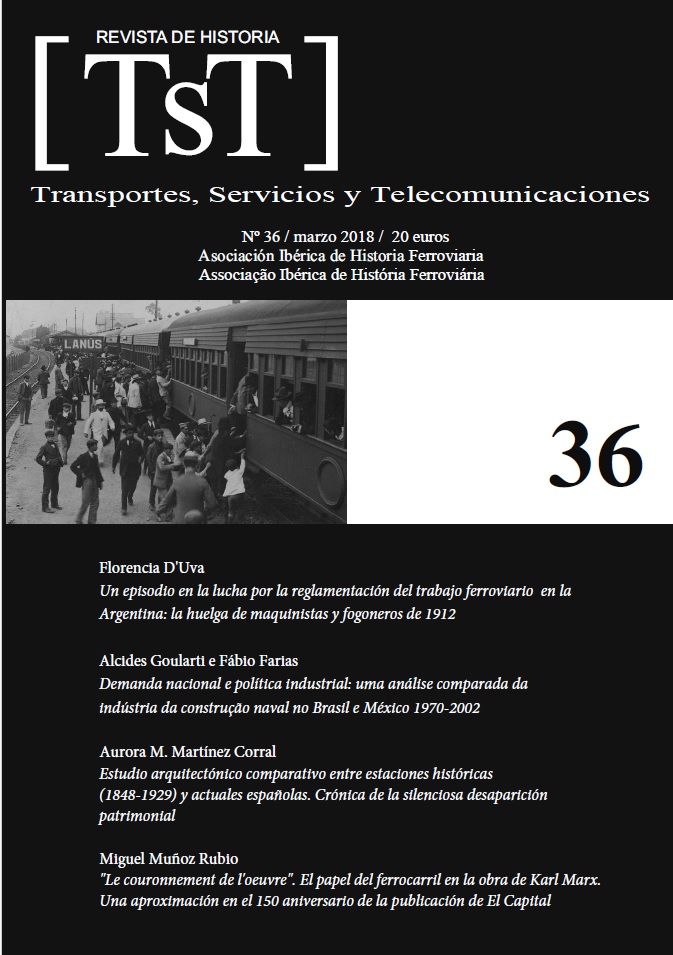
Un episodio en la lucha por la reglamentación del trabajo ferroviario en la Argentina: la huelga de maquinistas y fogoneros de 1912
Resumen:
Este trabajo indaga en la huelga de maquinistas y fogoneros de los ferrocarriles argentinos a comienzos de 1912. Este conflicto implicó un desafío para el gremio “La Fraternidad”, cuyos afiliados de todo el país abandonaron la labor en forma simultánea por primera vez en su historia. También las empresas y el gobierno debieron enfrentar las consecuencias de la paralización del tráfico ferroviario. Esta pesquisa reconstruye el desarrollo de la huelga, prestando atención a los reclamos, demandas y acciones desplegadas por los trabajadores durante el conflicto. Entiende que el análisis del mismo constituye un punto de mira privilegiado para examinar cómo los ferroviarios experimentaron sus condiciones de trabajo y de vida articulando demandas que interpelaban tanto a las empresas como al Estado. La investigación se nutre de un amplio corpus documental que incluye periódicos sindicales, partidarios y nacionales, documentación interna de La Fraternidad, historias oficiales del gremio ferroviario, memorias e informes elaborados por instituciones gubernamentales y las empresas.
♦ Alcides Goularti e Fábio Farias
Demanda nacional e política industrial: uma análise comparada da indústria da construção naval no Brasil e México 1970-2002
Resumen:
O objetivo deste artigo é descrever e analisar de forma comparativa a história econômica da construção naval brasileira e mexicana de 1970 a 2002. O período inclui a continuação da pesada industrialização na década de 1970, a crise da dívida externa dos anos 1980 e a reestruturação produtiva neoliberal dos anos 1990 a 2002, com a mudança política no Brasil e no México. O foco principal é nos processos institucionais, produtivos e políticos, com ênfase no papel do Estado na promoção do desenvolvimento do setor de navegação.
♦ Aurora M. Martínez Corral
Estudio arquitectónico comparativo entre estaciones históricas (1848-1929) y actuales españolas. Crónica de la silenciosa desaparición patrimonial
Resumen:
Muchas de las principales estaciones históricas han sido reemplazadas por banales edificios que justifican su existencia en conceptos como funcionalidad o seguridad. Valores materiales como la configuración espacial y la materialidad, o inmateriales como el espíritu del lugar o el recuerdo colectivo asociado, han sido eliminados o reducidos sustancialmente. Este trabajo realiza un análisis crítico comparativo entre los edificios de viajeros de las estaciones históricas y sus sustitutos con el objetivo de determinar qué está ocurriendo realmente con este patrimonio y qué distancia existe entre las declaraciones y las actuaciones. No sólo estamos perdiendo calidad arquitectónica con las nuevas construcciones sino también parte de nuestra memoria reciente, así como también parte del espacios públicos. Esta silenciosa desaparición consentida y la desafección colectiva puede llevarnos a la triste conclusión de que estos edificios históricos están condenados a morir o a perder su consideración patrimonial en aras de su mercantilización y posible especulación.
♦ Miguel Muñoz Rubio
«Le couronnement de l’oeuvre». El papel del ferrocarril en la obra de Karl Marx. Una aproximación en el 150 aniversario de la publicación de El capital
Resumen:
El objetivo de este artículo reside en efectuar un análisis del papel que tuvo el ferrocarril en la obra de Karl Marx. Para ello se han estudiado sus cuadernos de trabajo, sus obras publicadas y su correspondencia. El resultado de este ejercicio señala primero que, durante una primera etapa que abarca desde su incorporación a la Gaceta Renana hasta su llegada a Inglaterra, sus principales aportaciones residieron en considerar el ferrocarril como uno de los responsables de la revolución de los transportes que hizo posible la consolidación del capitalismo y en reclamar que formara parte de la propiedad pública. Y, segundo, durante su periplo británico, Marx estudió cómo el ferrocarril, como una modalidad más de la industria de los transportes, operaba en la producción y circulación del capital.
Reseñas
♦ Margarita Vilar-Rodríguez
André Straus & Leonardo Caruana de las Cagigas, Highlights on Reinsurance History
♦ por Begoña Villanueva
José Manuel Huidobro Moya y Miguel Vergara Trujillo, 30 años del sector de las telecomunicaciones en España
♦ Jesús Miras Araujo
Raimundo Otero Enríquez, Sociología e historia de la ciudad desconcentrada
♦ Rafael Barquín
Martín Rodrigo y Alharilla, La marina mercante de vapor en Barcelona (1834-1914)