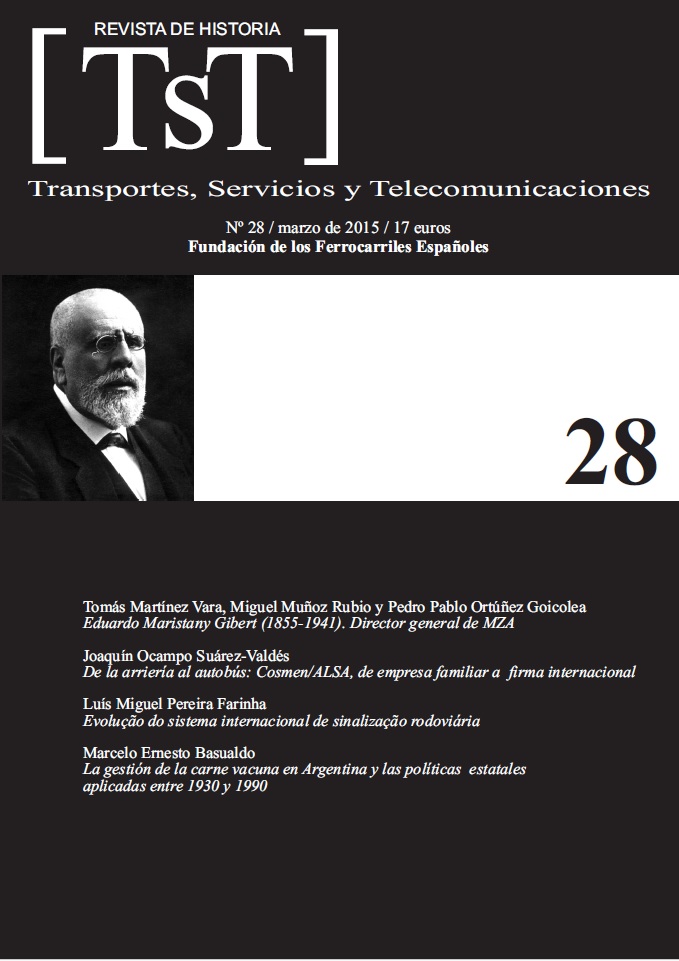
TsT28. 2015.
Artículos
♦ Tomás Martínez Vara, Miguel Muñoz Rubio, Pedro Pablo Ortúñez Goicolea
Eduardo Maristany Gibert (1855-1941). Director General de MZA
Resumen:
Este trabajo pretende aproximar al lector y destacar para la historiografía, la figura de un ingeniero de Caminos, Canales y Puertos, que durante muchos años fue director general de una de las mayores empresas ferroviarias españolas: la Compañía de los Ferrocarriles de Madrid a Zaragoza y Alicante (MZA). Su polifacética figura tiene enorme interés para la investigación histórica.
Fue el prohombre de las empresas ferroviarias, especialmente desde su ascenso en 1908 a la dirección de MZA, hasta 1934 en que se jubiló voluntariamente. Destacó como constructor, con el túnel de Argentera. Escribió multitud de artículos y libros. También lo hizo por su visión de las relaciones laborales, propia de un liberal puro. Influyó decisivamente en la política ferroviaria de sus años, dejando una profunda herencia en la gestión y procedimientos de trabajo, que se prolongó más allá de la nacionalización.
♦ Joaquín Ocampo Suárez-Valdés
De la arriería al autobús: Cosmen/ALSA, de empresa familiar a firma internacional
Resumen:
A partir del archivo familiar de los Cosmen, este artículo analiza la trayectoria de una dinastía empresarial centenaria cuyo desempeño se vinculó desde el siglo XI a la arriería. Rentas de situación derivadas del emplazamiento de la empresa y «rentas políticas» asociadas al reconocimiento de su función económica estratégica, otorgaron a los Cosmen ventajas competitivas sobre las que cimentar una senda singular de crecimiento. De la tracción de sangre a la mecánica, su especialización en el transporte convertirá a aquella empresa familiar en una reputada firma multinacional, caso habitual de estudio en las escuelas de negocios. Con este estudio se pretenden tres objetivos: ilustrar un desarrollo empresarial «dependiente de la trayectoria», confirmar las tesis de Krugman sobre las relaciones entre territorio y economía, y brindar argumentos acerca de la eficacia de la empresa familiar como instrumento de internacionalización.
♦ Luis Miguel Pereira Farinha
Evoluçao do sistema internacional de sinalizaçao rodoviária
Resumen:
El sistema de señalización de tráfico en vigor en muchos países del mundo, que es el resultado de más de un siglo de trabajo realizado en conferencias y reuniones internacionales, nació de la necesidad de crear normas de tráfico adaptadas al automóvil, que se confirmó a finales del siglo XIX y principios del siglo XX. Estos trabajos llevaron a la conclusión de tratados internacionales en los que se consolidaron normas acordadas por varios Estados, a los que se han ido adhiriendo sucesivamente otros Estados.
Del análisis realizado se concluye que los Estados, en cada tratado que celebraran en materia de tráfico y señalización, han hecho un esfuerzo para llegar a acuerdos cada vez más detallados, más completos, que regulasen las nuevas situaciones, siempre desde los intereses de la seguridad vial y de la facilitación de la circulación por carretera internacional.
Este artículo pretende ofrecer una perspectiva de la evolución del sistema de señalización vial, basada en el análisis de sus instrumentos más importantes, mostrando cómo las normas adoptadas en cada momento contribuyeron a la estructuración y consolidación del mismo sistema.
♦ Marcelo Ernesto Basualdo
La gestión de la carne vacuna en Argentina y las políticas estatales aplicadas entre 1930 y 1990
Resumen:
Desde la crisis internacional de los años treinta el Estado comenzó a intervenir en el mercado de la carne vacuna y durante los cincuenta años siguientes los representantes de la ganadería participaron en la determinación de las políticas sectoriales, a través de la Junta Nacional de Carnes y la Corporación Argentina de Productores de Carne, creadas en los años treinta. Estas instituciones, después de algunos años iniciales de claro protagonismo y autonomía, debieron someterse a las políticas económicas de sucesivos gobiernos por la fundamental importancia de la carne vacuna en la economía del país.
Las representaciones ruralistas debieron responder –de una u otra forma– a la política económica desde la dirección de estas entidades. En este sentido, los archivos de los directorios de la CAP –Archivo General de la Nación (AI)–, principalmente, reflejan esta interacción del sector –ganaderos y frigoríficos– con el Estado, y los problemas más críticos que le afectaban. Esta evaluación de las políticas por el propio sector interesado, con una visión parcial, se confronta con trabajos analíticos sobre los problemas planteados, diagnóstico, políticas empresariales, sectoriales y del Estado que le dan respuesta.
Reseñas
♦ Carlos Larrinaga
Xabier García Barber, La cerveza en España. Orígenes e implantación de la industria cervecera
♦ Rafael Barquín
Albert Broder, Los ferrocarriles españoles (1854-1913): el gran negocio de los franceses
♦ Begoña Villanueva
A. Novo López y Arantza Pareja Alonso (Editores), Ferrocarriles y sociedad urbana en el País Vasco
♦ Beatriz Correyero Ruiz
Carlos Larrinaga, Balnearios guipuzcoanos, 1776-1901. Turismo de salud e inversión de capital en aguas minerales