Diccionario Biográfico de los ferrocarriles ibéricos
Dicionário biográfico dos caminhos-de-ferro ibéricos
Ribera Dutasta, José Eugenio (1864-1936)
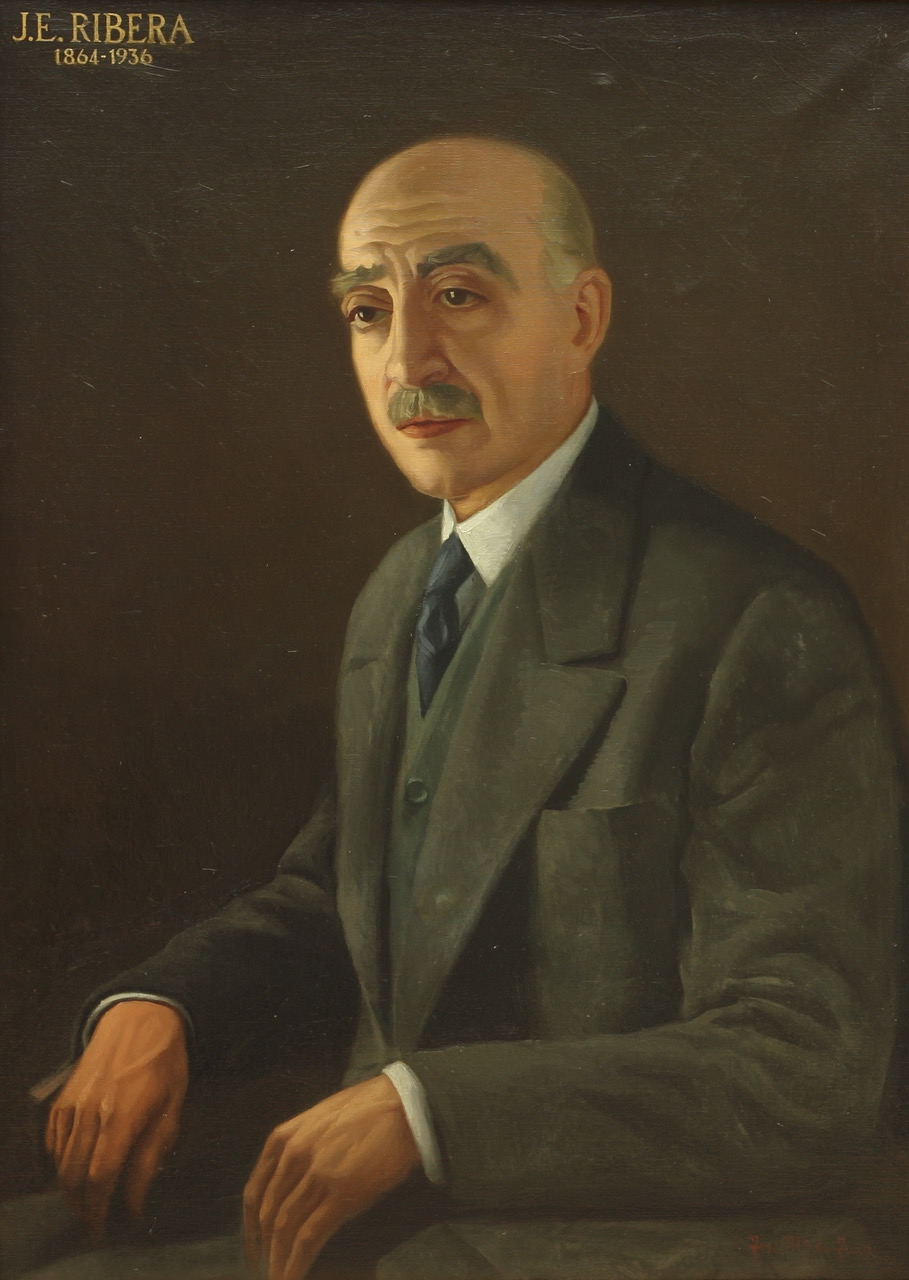
José Eugenio Ribera Dutasta (1864-1936)
En la reciente historiografía de la ingeniería Civil, J. Eugenio Ribera destaca en varias facetas fundamentales: como pionero e innovador en el uso del hormigón armado en España y divulgador del nuevo material; como empresario, creando la primera empresa constructora dedicada a las Obras Públicas en 1899; como ingeniero ferroviario; como docente en la Escuela de Caminos en Madrid; y maestro de grandes Ingenieros.
Hijo de padre catalán, Pedro Ribera Griñó, y madre francesa, Jeanne Dutasta Berger, nació en Lisboa el 6 de octubre de 1864, donde su padre trabajaba como ingeniero en la construcción de ferrocarriles. Formado en París, estudió en la Escuela de Caminos, entre 1882 y 1887. En ese mismo año, ingresó al servicio del Estado y fue destinado a la jefatura de Obras Públicas de Oviedo, donde permaneció doce años. Allí empezó su larga trayectoria como constructor de puentes, metálicos y sobre todo de hormigón armado (mas de 500 registrados). Fue el autor del primer puente de hormigón armado en España, el puente de Golbardo sobre el río Saja, en Reocín (Cantabria) en 1902; innovadores fueron los sifones del Sosa y el de Albelda (1904 y 1906) para el Canal de Aragón y Cataluña; y de gran interés por su difusión la redacción de los “Modelos oficiales de puentes en arco” para la Administración (1920-1923). Fallece el 17 de mayo de 1936.
El transporte ha sido uno de los pilares de la vida profesional de J. Eugenio Ribera. Desde su infancia vivió la aventura de su padre Pedro Ribera Griñó siempre ligado al ferrocarril bien en su inicio con la Companhia dos Caminhos de Ferro Portugueses, hasta con la Compañía de los Caminos de Hierro del Norte; bien estudiando y trabajando nuevos sistemas de vehículos, de material móvil, como el locomóvil o “locomotora para carreteras”. Publicó numerosos textos y artículos referentes al ferrocarril económico, al ferrocarril carretero, a la seguridad de los ferroviarios, a las máquinas. En 1899 se presenta un proyecto familiar con el objetivo de realizar un “Ferrocarril carretero de Torrelavega a Infiesto y de Arriondas a Covadonga”.
Es en ese mismo año, 1899, cuando decide pasar a situación de ingeniero supernumerario, dejando el cuerpo de ingenieros del Estado, para hacerse cargo de forma exclusiva de la empresa “Compañía de construcciones hidráulicas y civiles”, fundada ese mismo año y que mantiene hasta su fallecimiento. En su “Última lección” en la Escuela de Caminos (1931), cita expresamente que personalmente se encargó de los temas ferroviarios: “estudie personalmente y sobre el terreno, por iniciativa mía o por encargo, ocho proyectos de ferrocarriles, con 530 kilómetros de longitud, de los que únicamente citaré: el terminado de Tánger a Fez (sección española) y el que se está construyendo de Cuenca a Utiel, en los que muchos y penosos tanteos me permitieron descubrir trazados que mejoraron sensiblemente los anteriores estudios”.
A partir de 1900, Ribera colabora con la Compañía MZA, a través del ingeniero Ramón Peironcely para la línea de Albacete-Cartagena (1899), y en la reforma y construcción de la nueva estación de Huete (Cuenca), ya realizada en hormigón armado (1900); es contratado para construir puentes en el fc. Internacional Lérida-Saint Girons; en el fc. del Urola (1914); en el fc. de Alicante-Villajoyosa-Denia (1914-1915); en el fc. de la línea de Poveda a Torrejón para la Azucarera de Madrid (puente sobre el río Henares). Fue contratado por la empresa constructora del ferrocarril de vía estrecha de Palencia a Villalón y Medina de Rioseco a Villeda (1909) para la infraestructura y obras de fábrica; fue contratista del fc. de vía estrecha de Cienpozuelos-Arganda. Como promotor y empresario solicitó la concesión del tranvía eléctrico de Oviedo a Gijón en 1912; el del ferrocarril de Trubia a Barcena de Quirós (1917); el del ferrocarril de Prudencio a Oñate (1917); y el ferrocarril de Villablino a Cangas de Tinea (1918). Obras poco conocidas pues la figura del constructor queda relegada frente al ingeniero director de las obras, al ingeniero de la Compañía.
Una de sus obras más reconocidas, por sus numerosas dificultades técnicas, sociales, políticas, fue el proyecto y construcción del Ferrocarril de Tánger a Fez (1915-1927). Creado el protectorado de Marruecos español en 1912, en 1915 le nombran director general adjunto de la Compañía Franco-Española del Ferrocarril de Tánger a Fez, puesto en la empresa que mantuvo durante todo su proceso, construcción y explotación. Junto a él, José Sans Soler como ingeniero Jefe adjunto, Ramón de Cortazar, Juan J. Luque, Santiago Rodríguez, Rafael Frutos y Alfonso Rózpide, como jefes de sección. El contratista fue José María Escriña con el que realizó otros muchos proyectos en Marruecos, como el ferrocarril de Ceuta a Tetuán.
La implicación de Eugenio Ribera en este ferrocarril fue importante. Estudió un nuevo trazado, optando por pasar por la ciudad costera de Arcila, con mejores condiciones orográficas, con un perfil longitudinal más suave y vía de enlace con Larache. El 31 de enero de 1916, presentaba Ribera el proyecto completo del ferrocarril, trazado, perfiles, secciones del camino y obras de fábrica.
Desde Tanger el trazado de Ribera discurría por Biban, Cuesta Colorada, Briex, Arzila, Tzenin Sidi Aman, Tzelaza de Raisana, Mehacen y Alcazarquivir. La línea debía atravesar, en la zona española, los ríos Mahrar, Haxef, Garifa, Jelu, Mejacen, Uarur y Lucus. Para salvar estos vanos proyectó tramos rectos independientes de hormigón armado. El desarrollo de la construcción fue complicado. Entre 1909 y 1927 existió una fuerte resistencia marroquí con numerosos ataques bereberes.
Una de las últimas actividades en el mundo ferroviario fue su participación junto con García Lomas en el Congreso Internacional de Caminos de Hierro celebrado en Madrid en 1930. Fue encargado de una de las ponencias marco del congreso con el tema: “De la question de l’electrification des lignes secondaires”. Documento preparatorio para la sección XIX del congreso. Las conclusiones fueron ratificadas por la Asamblea Plenaria de la Association el 10 mayo de 1930. Un extenso estudio de ámbito mundial de la evolución de las líneas secundarias de cada país.
Un trabajo completísimo de análisis de todas aquellas líneas secundarias existentes en el mundo: Asia, África, América, Oceanía (a excepción de Europa que fue estudiado por L. Sekutowicz ). Conocer su red, los kilómetros de su trazado, sus compañías explotadoras, tipo de infraestructura, su tráfico de viajeros y mercancías, su tipo de tracción, existencia de líneas de tranways, su legislación y su posibilidad de electrificación eran el objetivo. De sesenta y nueve páginas constaba el estudio, el cual fue publicado en Bulletin de l’Association Internationale du Congrès des Chemins de Fer, y, posteriormente presentadas como ponencia marco al debate de la Asamblea del Congreso Internacional de Caminos de Hierro celebrado en Madrid en 1930.
Según sus propias palabras, a partir de la celebración del Congreso de Madrid, en 1930, observa que se ha acentuado en España la crisis económica de los ferrocarriles, acrecentada por la depresión económica mundial y ante todo por la formidable competencia desarrollada por el automóvil. Son de gran interés las últimas publicaciones recomendando los coches automotores.
Las sugerencias, polémicas, análisis, propuestas de Ribera sobre las comunicaciones, sobre el territorio, sobre los ferrocarriles, sobre las redes de transporte, plantean un pensamiento global y avanzado. Su claridad de ideas es fruto de su inteligencia analítica, de su gran experiencia, de sus preocupaciones. Por ello, critica abiertamente aquello que no cree que sea pertinente, correcto, que económicamente no sea factible, como en el caso de los ferrocarriles directos programados en las primeras décadas del siglo XX. Contempla los futuros cambios energéticos, electricidad, derivados del petróleo, etc., que suponen nuevos retos técnicos, como opciones vitales para el transporte y la sociedad.
Aguilar Civera, I., (2023), Innovación y modernidad. José Eugenio Ribera, ingeniero de Caminos, 1864-1936, Madrid, Fundación Juanelo Turriano.