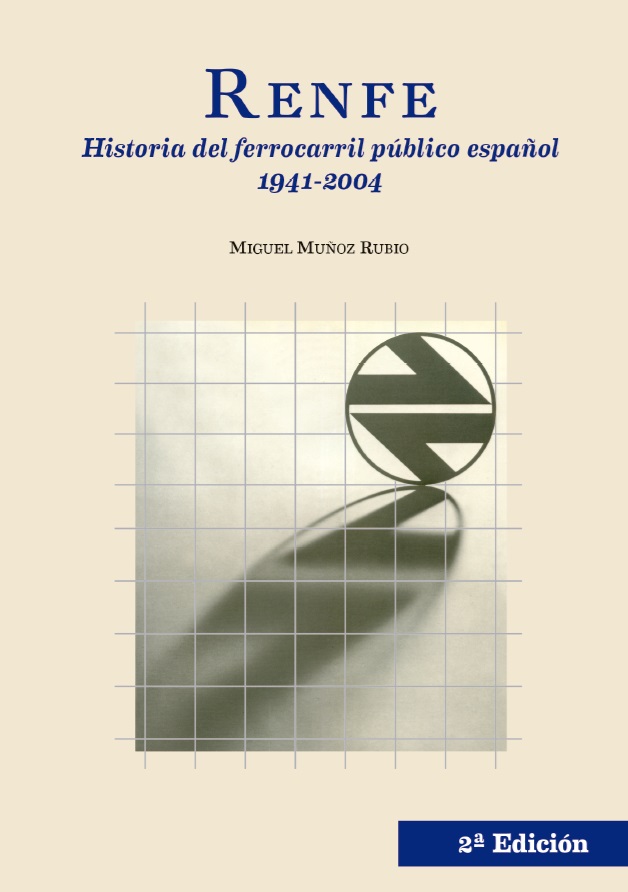
Miguel Muñoz Rubio RENFE. Historia del ferrocarril público español, 1941-2004
RENFE. Historia del ferrocarril público español, 1941-2004 es la segunda edición de Renfe (1941-1991): medio siglo de ferrocarril público (1995), tesis doctoral de Miguel Muñoz, en la cual, fruto de varias décadas de investigación, el autor reconstruye la historia de Renfe entre 1941 y 2005, año en que se escindió en otras dos empresas públicas. Como se señala en la presentación, se forma por una estructura diacrónica, que explica, a través de un pormenorizado análisis de sus principales elementos –políticas, organización, fuerzas productivas, tráficos y resultados económi- cos–, cómo el ferrocarril español sufrió un catastrófico deterioro durante la autarquía, del cual fue rescatado, entre 1963 y 1976, mediante su total reconfiguración. La democracia heredó un sistema remozado, pero poderosamente dañado, a pesar de lo anterior, por la dramática pérdida de sus cuotas de mercado ante la irrupción de la carretera. Se hace ver que se llegó, incluso, a dudar sobre su continuidad, si bien, al final, se optó para «salvarlo» creando un marco institucional con el fin de adaptarlo a la competencia del mercado y desarrollando una red de alta velocidad para recuperar su dinamismo, todo lo cual puso en cuestión su dimensión pública.
Como se aprecia en el índice, el libro se estructura por siete capítulos y un epílogo, y lleva incorporado un índice onomástico. Conserva el prólogo de la primera edición escrito por Miguel Artola y tiene una cubierta diseñada por Juan Toribio, creador del primer logo de Renfe y de sus primeras campañas publicitarias. El libro representa, en suma, una reflexión sobre el papel que ha desempeñado Renfe entre 1941 y 2004, de la cual se pueden extraer enseñanzas para entender el presente.