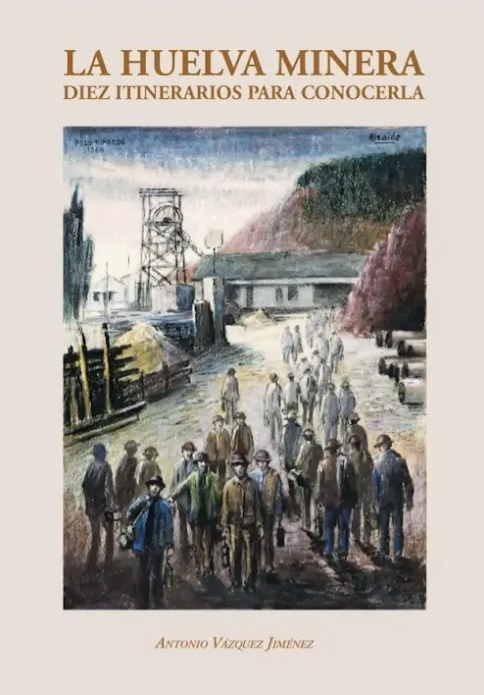
Antonio Vázquez Jiménez
La Huelva minera: diez itinerarios para conocerla
Diputación Provincial de Huelva, Servicio de Publicaciones, D.L. 2017.
La Huelva Minera es un recorrido por 42 de las minas que hay en la provincia de Huelva. “Es una representación importante, entre ellas: las más destacadas, pero también otras: las pequeñas me atraían para visitarlas y documentarlas, porque todas tienen su historia”, señala Antonio. La mayoría están hoy en estado de ruina, abandonadas, pues en la actualidad sólo funcionan las de Riotinto-Proyecto Atalaya Mining, el proyecto de Aguas Teñidas y la mina de Sotiel, que cuenta con un poblado minero pequeño. A cinco kilómetros han descubierto la mina Magdalena, de las pocas de reciente descubrimiento, muy rica en producción de cobre”, remarca el autor, y es la gran mayoría de las minas de la faja pirítica ya fue explotada por los fenicios y los romanos: “La fama de la provincia de Huelva viene de hace mucho tiempo, luego en el siglo XIX aparecieron ingenieros expertos en minas, franceses, ingleses y alemanes, que fueron redescubriendo las minas, estudiando los restos de escoriales y otros de fundiciones y labores antiguas”, indica.
El ensayo presenta diez itinerarios para recorrer los yacimientos y, en cada uno de ellos, se incluye un plano de cada itinerario y su entorno. Cada caso tiene una primera parte donde el autor describe la historia de la mina, con fotografías en blanco y negro, y una segunda en la que se describe el estado de la mina en la actualidad y otras informaciones prácticas.