Celebrado el III Encuentro de Historia Ferroviaria en Valladolid
El pasado 20 de junio se celebró el III Encuentro de Historia Ferroviaria en la Facultad de Ciencias Económicas y Empresariales de la Universidad de Valladolid. Organizado por ASIHF, contó con la colaboración de la mencionada facultad, el Instituto Universitario de Historia Simancas y el Grupo de Investigaciones en Historia Económica. El Encuentro fue inaugurado por María del Valle Santos Álvarez, Decana de la Facultad de Ciencias Económicas y Empresariales, quien subrayó el acierto de organizar eventos colaborativos de esta naturaleza; y María Concepción Porras Gil, Directora del Instituto de Historia Simancas (Universidad de Valladolid), quien destacó la importancia que tuvo el ferrocarril en la construcción del imaginario decimonónico de modernidad que dio lugar al mundo moderno. Para ASIHF, el tema de este encuentro se justifica porque el Estatuto Ferroviario de 1924, de cuya promulgación se cumplen cien años el 12 de julio mediante un real decreto del Directorio Militar de Miguel Primo de Rivera, causó una relevante inflexión en la historia ferroviaria española. En efecto, el «Estatuto» pretendió resolver la crisis que el ferrocarril español arrastraba desde 1914 transfiriendo al Estado importantes competencias que, desde sus orígenes, habían mantenido las concesionarias privadas, quebrando, así, unilateralmente el «pacto concesional» de 1848. Si bien en el corto plazo ello posibilitó dar respuesta a los principales problemas, en el largo plazo abrió un proceso de estatalización del sistema ferroviario español que acabó en 1941 con la nacionalización y la creación de la empresa pública Renfe.
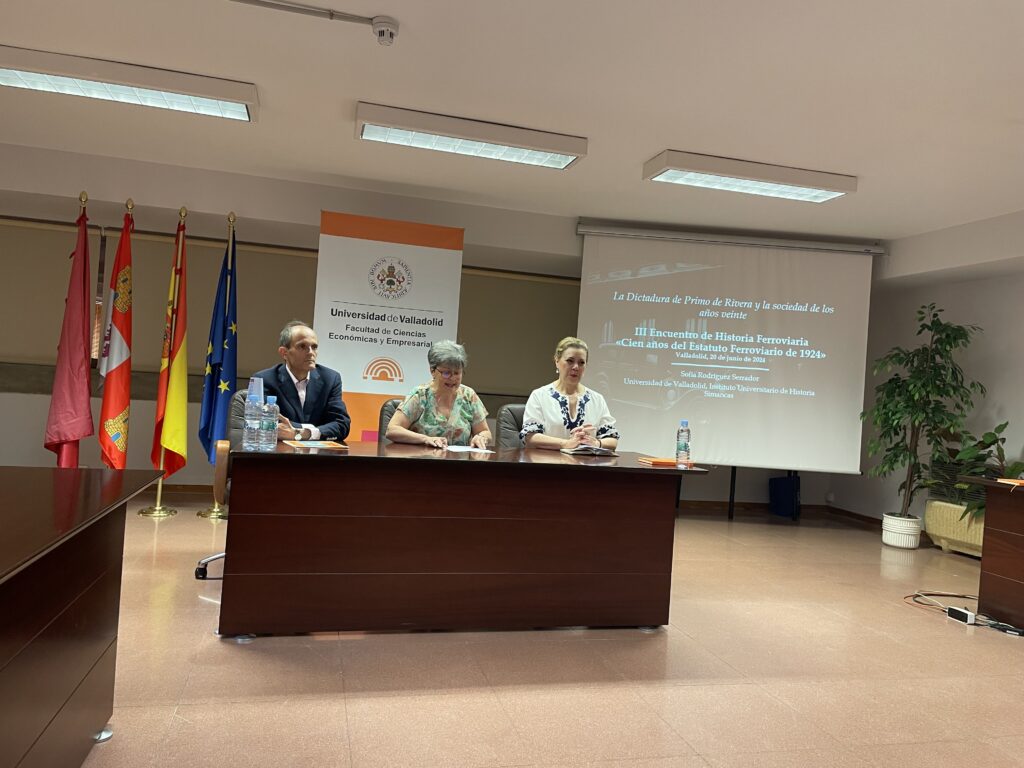
María del Valle Santos Álvarez, decana de la Facultad de Ciencias Económicas y Empresariales, María Concepción Porras Gil, directora del Instituto de Historia Simancas, y Pedro Pablo Ortúñez Goicolea, director del Departamento de Historia Económica, en la inauguración del Encuentro.
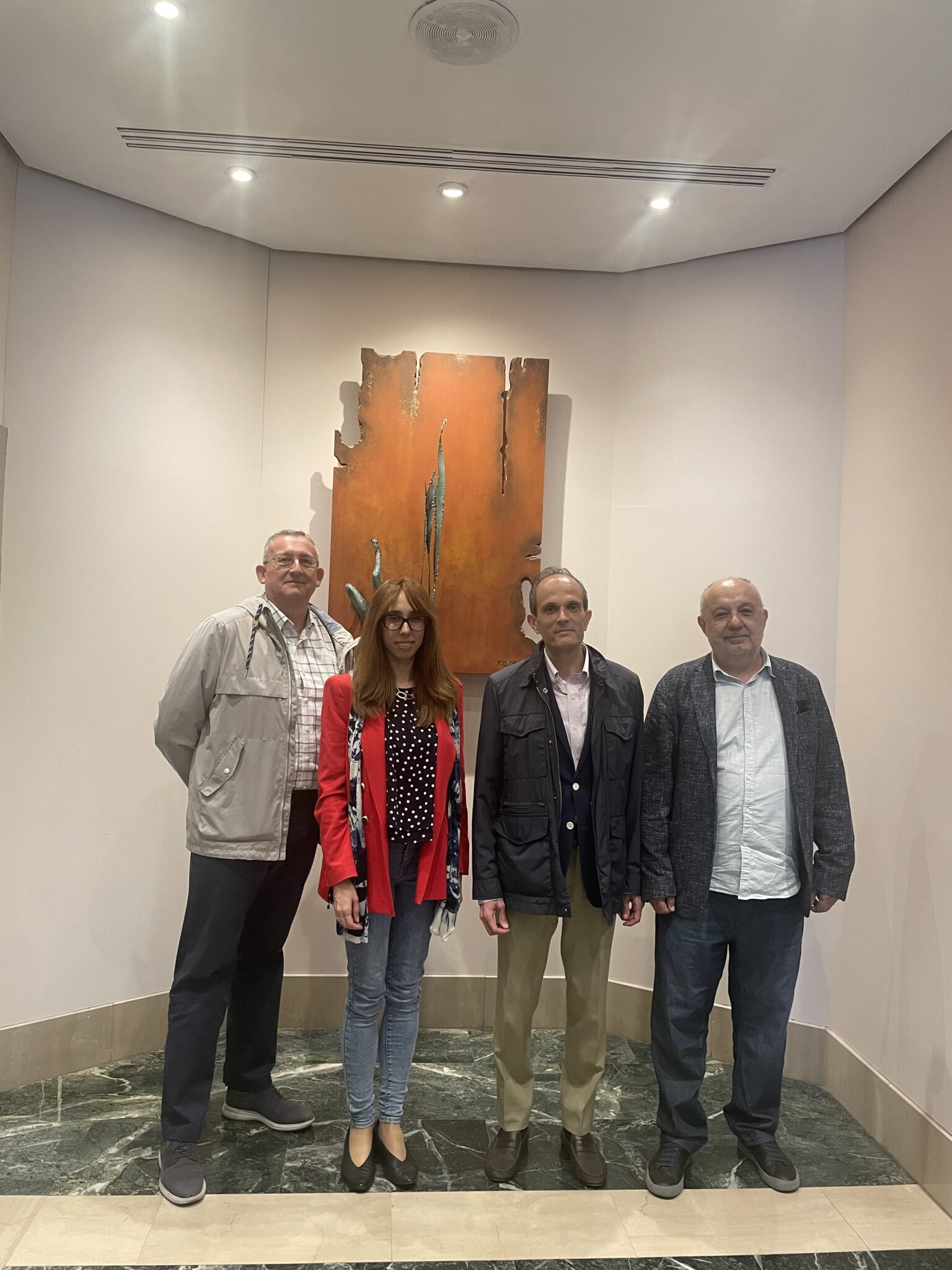
Los historiadores participantes en el Encuentro, Francisco Polo, Sofía Rodríguez Serrador, Pedro Pablo Ortúñez y Miguel Muñoz Rubio.
El Encuentro se inició con la ponencia de la profesora de la Universidad de Valladolid Sofía Rodríguez Serrador, La Dictadura de Primo de Rivera y la sociedad de los años veinte, quien explicó el contexto político, económico y social en el que plasmó este nuevo marco legislativo ferroviario. A continuación, el catedrático de la Universidad de Valladolid Pedro Pablo Ortúñez Goicolea expuso su ponencia La Dictadura de Primo de Rivera y el sector ferroviario: un matrimonio de conveniencia y mal avenido, explicando la naturaleza del Estatuto, haciendo hincapié en que puso final al marco iniciado en 1844 y abrió, por consiguiente, una nueva etapa caracterizada por el papel central desempeñado por el Estado en la explotación ferroviaria. Después de un breve descanso, Francisco Polo Muriel, historiador de ADIF, expuso su ponencia El Plan Guadalhorce. Un fallido intento regeneracionsista, en la que explicó dicho plan, haciendo ver sus pretensiones y logros obtenidos. Y, por último, Miguel Muñoz Rubio, historiador de la FFE y presidente de ASIHF, defendió la ponencia La consolidación del sector de fabricación de material ferroviario bajo el Estatuto Ferroviario, mediante la cual explicó cómo nació este sector en España y el papel decisivo que cumplió el Estatuto para que éste se consolidase. Y, por último, tras un animado debate, se clausuró el Encuentro.